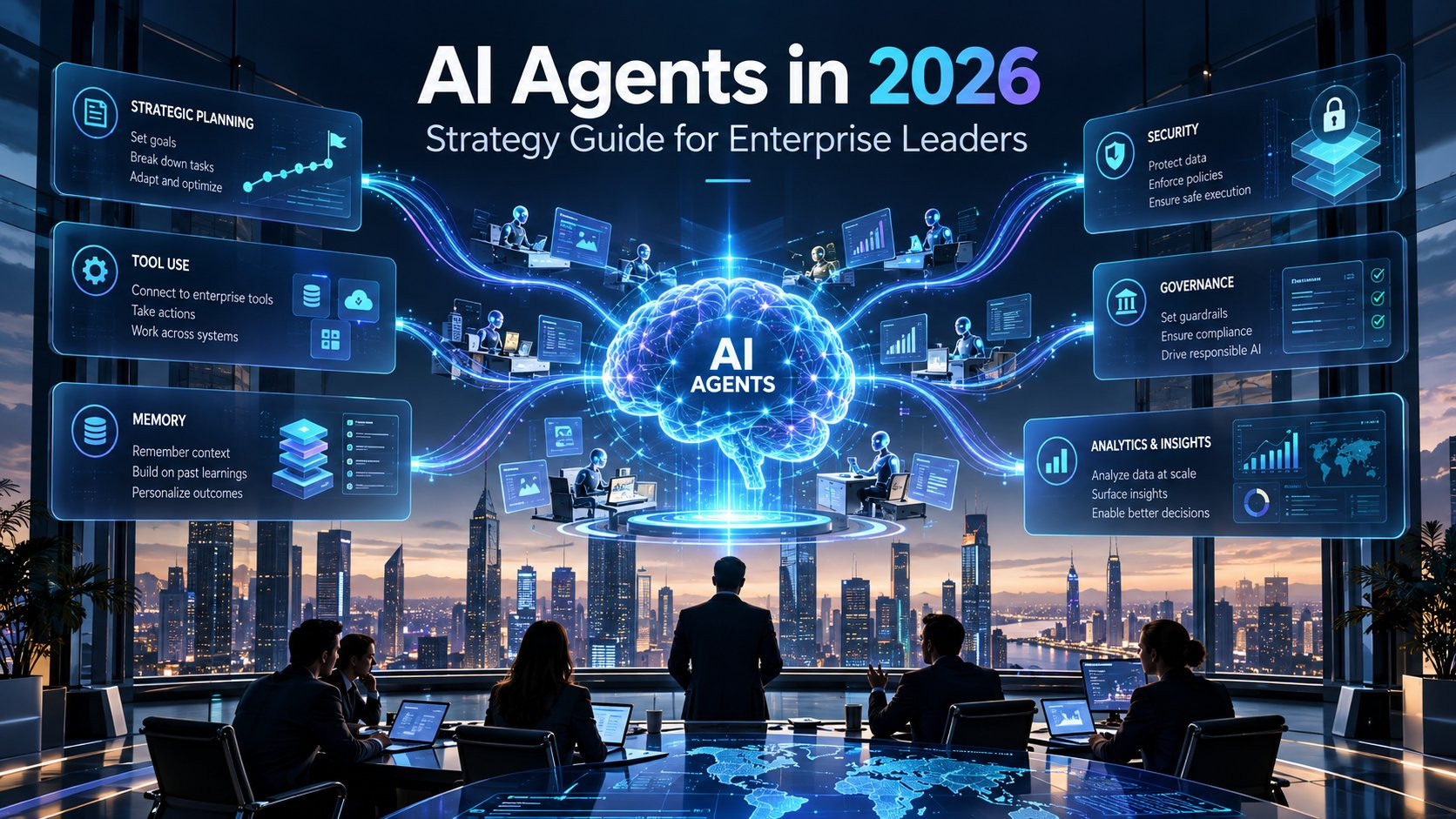
Real-World Agentic AI: 10 Production Use Cases Across Industries
The enterprise AI landscape reached an inflection point in late 2025. While generative AI captured headlines with its creative capabilities, a more transformative shift occurred beneath the surface: autonomous AI agents moved from experimental pilots into mission-critical production systems across Fortune 500 operations. This isn't speculative futurism—it's operational reality, backed by $50 billion in global spending and measurable ROI that's convincing skeptical CFOs to double down on deployment. neurons-lab
Agentic AI represents a fundamental departure from traditional automation. These systems don't simply execute predefined rules; they reason, plan multi-step workflows, make contextual decisions, and adapt their strategies based on outcomes—all with minimal human intervention. The distinction matters because it unlocks automation of complex, judgment-intensive processes that resisted previous attempts at digitization. When McKinsey reports that early implementations reduce manual workloads by 30-50% and manufacturing pilots deliver 200-400% ROI within 12-18 months, executive attention shifts from "if" to "how fast can we scale." mdcplus
Yet the adoption curve reveals a critical divide. While 44% of finance teams plan to deploy agentic AI in 2026—a 600% year-over-year increase—Gartner simultaneously warns that over 40% of initiatives will be canceled by 2027 due to unclear business value or inadequate risk management. This paradox defines the current moment: enormous potential colliding with implementation complexity, governance gaps, and organizational unreadiness. The enterprises that successfully navigate this transition—building explainable, governed, and measurably valuable agent systems—will establish defensible competitive advantages that compound over years. forbes
This analysis examines ten production-grade use cases where agentic AI is delivering quantified business impact today, drawn from implementations at scale across banking, manufacturing, healthcare, retail, and infrastructure sectors. Each use case includes documented ROI metrics, architectural considerations, and the governance frameworks that separate successful deployments from failed pilots.
The Economics of Agentic AI: Why 2026 Is the Deployment Year
Enterprise technology adoption follows predictable patterns: early proof-of-concepts give way to limited pilots, then selective production rollouts, and finally enterprise-wide integration. Agentic AI entered the pilot phase in 2024-2025, and multiple converging factors are now driving production-scale deployment in 2026.
Market momentum reflects confidence in measurable returns. KPMG estimates global agentic AI spending reached $50 billion in 2025, with projected annual EBITDA improvements of 5.4% for companies implementing at scale. This translates to approximately $3 trillion in corporate productivity gains when extrapolated across global enterprises. These aren't projections from AI vendors—they're analyst estimates based on early deployments showing time-to-value windows of 6-12 months and cumulative benefits that increase as agent systems learn from operational data. neurons-lab
Regulatory timelines are forcing governance maturity. The EU AI Act reaches full enforcement in August 2026, with penalties reaching €35 million or 7% of global revenue for non-compliant high-risk AI systems. Colorado's AI Act takes effect in June 2026, and multiple jurisdictions are implementing transparency and accountability requirements specifically targeting autonomous decision systems. Organizations that delay deployment while competitors establish governance frameworks will face compounding disadvantages: later entrants must simultaneously build technical capabilities and compliance infrastructure under regulatory scrutiny. fluxforce
Technology platforms reached enterprise-readiness thresholds. OpenAI's AgentKit, Google's Vertex AI Agent Builder, and Anthropic's Model Context Protocol (MCP) provide production-grade orchestration layers that didn't exist 18 months ago. GitHub's Agent HQ unifies management across multiple agent platforms, while the Agentic AI Foundation—backed by OpenAI, Google, Microsoft, Anthropic, and AWS—is standardizing interoperability protocols. These infrastructure investments signal vendor commitment to long-term support and integration, reducing deployment risk for enterprises. tomshardware
Industry-specific adoption curves validate the business case. In financial services, 50 of the world's largest banks announced over 160 agentic AI use cases in 2025 alone. Manufacturing executives are allocating 50%+ of future AI budgets to agent systems. Cisco's 2025 survey indicates 56% of customer support interactions will use agentic AI by mid-2026, rising to 68% by 2028. When industry leaders publicly commit resources at this scale, competitive pressure forces rapid follower adoption. cloud.google
The economic case is straightforward: organizations that deploy governed, measurable agent systems in 2026 will establish 12-24 month operational advantages while competitors struggle with integration complexity, regulatory compliance, and organizational change management. The window for first-mover advantage is narrow and closing.
1. Autonomous Customer Service: From Deflection to Resolution
Traditional customer service automation focused on deflecting inquiries—routing customers to FAQs, decision trees, or self-service portals before escalating to human agents. Agentic AI transforms this model by resolving issues end-to-end through contextual reasoning, multi-system coordination, and autonomous action.
How it works in production: Agentic customer service systems integrate with CRM platforms, order management systems, knowledge bases, and payment processors. When a customer initiates contact, the agent analyzes conversation history, account status, product entitlements, and sentiment in real-time. It doesn't follow a decision tree—it constructs a resolution plan based on the specific context, then executes actions autonomously: processing refunds, modifying subscriptions, scheduling appointments, or troubleshooting technical issues across multiple backend systems. alphabold
Measurable business impact: Gartner forecasts autonomous resolution of 80% of common customer service issues by 2029, with early implementations already achieving 70%+ resolution rates today. The economic impact extends beyond labor savings: contact centers report 30-40% cost reductions, but the strategic value lies in scalability—handling volume spikes without degradation, 24/7 availability, and consistent service quality that improves customer lifetime value. Organizations implementing production systems see average handle time (AHT) reductions of 42%, first-contact resolution (FCR) improvements of 20-30%, and CSAT score increases as customers receive faster, more accurate support. searchunify
Production examples: Doctronic, an AI-powered telehealth startup, autonomously triages over 10 million symptom inquiries with a 70% diagnostic match rate, reducing clinical team burden while maintaining care quality. AtlantiCare deployed clinical documentation agents that achieved 80% provider adoption, reducing documentation time by 42% and saving physicians approximately 66 minutes per day. These aren't isolated pilots—they're operational systems handling millions of interactions monthly. valtech
Critical success factors: The gap between 70% and 80% resolution rates hinges on knowledge base coverage, context persistence across sessions, and sophisticated escalation logic that recognizes when human judgment is required. Organizations that achieve sustainable ROI maintain rigorous feedback loops: tracking which escalations could have been automated, continuously retraining models on new product knowledge, and measuring resolution quality alongside speed. azilen
2. Banking & Financial Services: Zero-Touch Operations
Financial services faces a paradox: regulatory requirements demand human oversight of critical decisions, yet operational costs force automation of high-volume, low-complexity processes. Agentic AI resolves this tension through governed autonomy—systems that operate independently within defined boundaries while maintaining explainable audit trails and human-in-the-loop checkpoints for high-risk scenarios.
How it works in production: Banking agents orchestrate workflows across core banking systems, loan origination platforms, risk tools, and compliance databases through secure APIs. A credit underwriting agent doesn't simply score applications—it gathers data from credit bureaus and telematics systems, evaluates risk exposure against carrier strategy, suggests pricing within regulatory limits, flags inconsistencies against fraud patterns, and prepares summaries for human review. The agent operates autonomously for routine cases but escalates edge cases with context-rich recommendations that accelerate human decision-making. azilen
Measurable business impact: McKinsey's analysis indicates agentic AI could reshape the global banking sector, putting $170 billion in profits at risk for institutions that fail to adapt. Early implementations demonstrate why: a US bank using agents for credit risk memos achieved 20-60% productivity increases and 30% improvements in credit turnaround time. PwC reports cycle time reductions of up to 80% in purchase order processing while improving audit trails and compliance ratings. These gains compound—faster turnaround improves customer acquisition, reduced error rates lower regulatory risk, and scalable processing enables market expansion without proportional headcount increases. neurons-lab
Production deployment scale: The 50 largest global banks announced 160+ agentic AI use cases in 2025, spanning fraud prevention (real-time transaction monitoring with contextual anomaly detection), compliance automation (AML screening consolidating thousands of data sources), client onboarding (document verification and KYC across regulatory frameworks), and underwriting (multi-agent systems coordinating data collection, risk evaluation, fraud detection, and pricing). research.aimultiple
Governance requirements: Financial services deployments prioritize explainability and accountability. Successful systems log every data source, decision factor, and confidence score, enabling regulatory audits and customer appeals. The UK Information Commissioner's Office specifically addressed agentic AI data protection implications, emphasizing that organizations remain fully responsible for autonomous system compliance. Banks operating across jurisdictions must design for the strictest regulatory environment—EU AI Act, Colorado AI Act, and sector-specific requirements—rather than implementing region-specific variations. squirepattonboggs
3. Manufacturing: Predictive Operations and Autonomous Quality Control
Manufacturing combines high capital intensity, thin margins, and operational complexity—a cost structure that amplifies the value of marginal efficiency gains. Agentic AI addresses three critical value drivers: predictive maintenance that prevents unplanned downtime, quality control that catches defects before they become batch failures, and production optimization that dynamically adjusts to demand fluctuations.
How it works in production: Factory AI assistants integrate with ERP (work orders, inventory), MES (production tracking), QMS (quality data), IoT/SCADA (equipment performance), and maintenance logs. Employees—operators, supervisors, managers—ask natural language questions: "Why did Line 3 have the most downtime last week?" or "Show me defect trends by supplier for Q3.". The agent doesn't just retrieve data—it performs root cause analysis, identifies correlating variables, and recommends corrective actions. Predictive maintenance agents analyze sensor streams to flag performance degradation before failure occurs, enabling proactive scheduling that avoids downtime. thesunflowerlab
Measurable business impact: Google Cloud reports that quality control, factory production, and supply chain logistics show the highest ROI potential in manufacturing despite longer implementation timelines, because they directly impact revenue generation and risk mitigation. Early pilots deliver ROI of 200-400%, with payback periods of 6-18 months in targeted high-volume workflows. A mid-sized automotive parts manufacturer deployed agents for predictive maintenance and energy optimization, investing $1M and achieving $2.5M in annual savings—a 250% ROI in year one through reduced downtime, optimized inventory, and improved delivery performance. mdcplus
Strategic shift from reactive to proactive: Traditional manufacturing operates reactively—responding to equipment failures, quality escapes, and demand spikes after they occur. Agentic systems enable predictive orchestration: sensing capacity constraints before they impact throughput, identifying supplier quality degradation in time to source alternatives, and reconfiguring production schedules around disruptions without human replanning. This operational resilience becomes a competitive advantage when supply chains face geopolitical volatility and customer tolerance for delivery delays diminishes. thesunflowerlab
Implementation patterns: Successful deployments start with high-visibility pain points—lines with frequent unplanned downtime, product families with elevated defect rates, or material bottlenecks that cascade through production schedules. Pilots establish baseline metrics (OEE, scrap rate, maintenance costs), deploy agents with clear decision boundaries, and measure impact monthly. Organizations that achieve sustainable value expand systematically: adding equipment types, integrating additional data sources, and increasing agent autonomy as trust and governance mature. mdcplus
4. Supply Chain & Logistics: Dynamic Routing and Demand Orchestration
Supply chains generate massive real-time data—GPS tracking, traffic conditions, weather forecasts, carrier capacity, port congestion, supplier performance—but traditional systems lack the decision velocity to translate signals into optimized actions before conditions change. Agentic AI closes this loop through continuous sensing, autonomous planning, and adaptive execution.
How it works in production: Logistics agents optimize routes dynamically, selecting carriers, consolidating loads, reassigning lanes, and renegotiating transport modes when conditions change. They use live telematics, ETA feeds, and external signals (traffic incidents, port delays, carrier exceptions) to replan in real-time and communicate updated instructions to drivers, carriers, and customers. Demand forecasting agents combine historical sales, market insights, social trends, and customer behavior to generate continuously updated predictions that align procurement, production, and distribution strategies. thesunflowerlab
Measurable business impact: Organizations leveraging agentic supply chain systems report 40% faster order processing, 35% higher operational efficiency, 30% fewer stockouts, and 25% lower operational costs. These aren't incremental improvements—they represent step-changes in working capital efficiency and service levels. Companies implementing AI-driven demand planning and shipment routing achieve 43% increases in real-time spend visibility and 30%+ improvements in procurement compliance ratings. The ROI compounds over time as thousands of routine decisions—carrier selection, inventory positioning, supplier allocation—become faster and smarter simultaneously. keydynamicssolutions
Risk management and resilience: Supply chain agents track everything that could disrupt operations—supplier bankruptcies, geopolitical tensions, weather events, labor actions—and adjust sourcing strategies before failures impact production. When a supplier shows performance degradation, the agent evaluates alternative sources, simulates cost and lead-time impacts, and recommends switching strategies with quantified risk-reward tradeoffs. This proactive risk management reduces expedited freight costs, minimizes stockout-related lost sales, and improves asset utilization through consolidation. datarobot
Enterprise adoption velocity: DataRobot reports that early supply chain agent wins come from embedding autonomy into repeatable processes with clean data and measurable ROI—demand planning, shipment rerouting, PO approvals. These "quick win" use cases build organizational trust and funding for broader deployment. Companies report inventory turnover improvements, fewer disruptions, reduced manual effort, and stronger supplier performance within 6-12 months of deployment. kodexolabs
5. Human Resources: End-to-End Recruitment Automation
Talent acquisition combines high-volume repetitive tasks (resume screening, interview scheduling) with judgment-intensive decisions (candidate assessment, offer negotiation). Traditional applicant tracking systems (ATS) automate data collection but require human intervention at every decision point. Agentic AI transforms the entire recruitment lifecycle through autonomous sourcing, intelligent screening, dynamic interviewing, and predictive matching.
How it works in production: Recruitment agents proactively source candidates by scanning platforms based on evolving role definitions and workforce gaps, engaging candidates autonomously with messaging adapted to prior interactions, and conducting preliminary assessments that dynamically adjust based on responses. Voice agents handle screening calls at candidates' convenience, routing agents direct qualified applicants to locations with highest need, and scheduling agents negotiate availability between candidates and hiring managers within minutes. The agent doesn't just filter resumes—it analyzes video interview responses sentence-by-sentence to gauge competencies and alignment with job requirements, providing feedback to hiring teams without leading to burnout. phenom
Measurable business impact: Organizations deploying agentic recruitment systems report over 60% reduction in hiring costs, 21+ days improvement in time-to-fill positions, and 35% increases in recruiter productivity. These gains come from eliminating repetitive manual processes—days of resume review compressed to hours, weeks of back-and-forth scheduling eliminated through autonomous coordination, and consistent candidate evaluation that reduces bias while accelerating decisions. For industries like retail and hospitality with fluctuating high-volume needs, autonomous recruitment transforms hiring velocity from a bottleneck into a competitive advantage. hrexecutive
Beyond resume keyword matching: Traditional ATS systems miss qualified candidates who use different terminology—someone writing "PM" instead of "product manager" gets filtered out despite strong qualifications. Agentic systems analyze semantic meaning, evaluate equivalent experience, and assess transferable skills across industries. VireUp's AI-driven interview agents evaluate candidates' video responses sentence by sentence, with human experts auditing and refining models to ensure correct interpretation of language nuances. This semantic understanding reduces false negatives while maintaining high screening standards. vireup
Organizational impact: Agentic recruitment frees HR teams from administrative execution to focus on strategic workforce planning, employer branding, and high-touch candidate experience for senior roles. The shift from "HR as process executor" to "HR as strategic architect" changes what organizations can accomplish with fixed headcount: scaling hiring velocity during growth phases, maintaining quality during downsizing, and improving diversity through bias-reduced screening. eightfold
6. Cybersecurity: Autonomous Threat Detection and Response
Cyber threats operate at machine speed—attackers deploy automated tools to scan for vulnerabilities, launch phishing campaigns, and exfiltrate data within minutes of initial access. Human security teams analyzing alerts after-the-fact face insurmountable time disadvantages. Agentic AI levels this asymmetry through autonomous detection, investigation, and containment that matches attacker velocity.
How it works in production: Security Operations Center (SOC) agents execute structured incident response workflows with minimal human intervention. Google's SOC Manager agent coordinates multiple sub-agents to ingest telemetry and threat intelligence feeds, enrich alerts with IOC context (IP reputation, malware hashes), cross-reference behavioral patterns with MITRE ATT&CK tactics, and execute automated containment runbooks when threats are confirmed. Threat hunting agents generate Sigma rules for detection based on MITRE ATT&CK techniques, continuously adapting detection logic as adversary tactics evolve. The system doesn't just alert—it investigates, contextualizes, and responds while escalating edge cases to human analysts with comprehensive situation assessments. research.aimultiple
Measurable business impact: Organizations implementing autonomous SOC agents compress time-to-triage and time-to-contain, translating operational efficiency into quantified risk reduction. When dwell time drives severity—ransomware encryption spreading laterally, data exfiltration accelerating—minutes matter exponentially. Early defenders report that agent-assisted investigation accelerates threat validation, enabling containment before widespread encryption or exfiltration occurs. This speed advantage is becoming baseline requirement: attackers increasingly leverage their own agentic tools to automate reconnaissance and lateral movement, forcing defenders to deploy autonomous countermeasures. blog.denexus
Attack surface management and offensive testing: Beyond defensive SOC operations, agents automate attack surface management and penetration testing. Specular's platform uses agentic systems to identify vulnerabilities, assess business impact, prioritize remediation based on exploit likelihood, and validate security controls through automated red-team exercises. Google DeepMind's CodeMender discovers zero-day vulnerabilities in well-tested software through autonomous code security analysis. This offensive-defensive pairing—agents finding vulnerabilities before attackers exploit them and agents defending against attacks in real-time—represents the emerging security architecture. blog.denexus
Governance and accountability: The UK ICO and multiple regulatory bodies emphasize that organizations deploying autonomous security agents retain full responsibility for data protection and response actions. Security leaders must implement robust logging (every decision, data access, and action), human approval checkpoints for high-impact containment (network isolation, account suspension), and regular audits to detect model drift or adversarial manipulation. By Q2 2026, leading organizations will implement Zero Trust architectures for non-human identities, ensuring agents operate under strict least-privilege principles. stellarcyber
7. Retail & E-commerce: Hyper-Personalization at Scale
E-commerce personalization historically meant showing "related items" or "customers also bought" recommendations—static, rules-based suggestions that ignore real-time context and user intent. Agentic AI enables contextual commerce: systems that understand what shoppers are trying to accomplish, proactively guide discovery, and autonomously optimize every touchpoint based on individual behavior, preferences, and conversion probability.
How it works in production: Personalization agents fuse browsing behavior, purchase history, seasonality, location, and context (weather, time-of-day, device) to predict intent and serve relevant products, cross-sells, and bundles across web, app, email, and SMS—before customers search. Dynamic pricing agents adjust rates using demand forecasts, competitor monitoring, inventory position, and customer-level elasticity to optimize margins without sacrificing conversion. Marketing orchestration agents define campaign goals and constraints (budget, target segments, frequency caps), then autonomously test creative variants, select channels, allocate spend, and iterate in real-time based on performance. eBay's shopping agent delivers hyper-personalized product picks and guidance tailored to individual shopping preferences, making discovery effortless from initial browse to purchase. everworker
Measurable business impact: Personalization agents increase conversion rates 15-35%, boost average order value (AOV) 10-25%, and drive 26-50% of total sales for mature implementations. Illustrative ROI analysis: $25.7K investment versus $3.75M conversion impact, $7.5M AOV lift, and $2M customer lifetime value gains—approximately 51,400% first-year ROI. These returns stem from precision monetization: capturing margin through dynamic pricing, eliminating wasted ad spend through autonomous campaign optimization, and reducing cart abandonment through proactive intervention. everworker
Autonomous shopping agents: The shift from "browse and buy" to "agent-assisted discovery" represents a fundamental interface change. Shoppers increasingly delegate purchasing tasks to agents: "Find a boho-style throw pillow under $30" triggers autonomous search, evaluation, comparison, and purchase across multiple retailers. OpenAI's Operator tool, Runner H, and HyperWriteAI enable agents to navigate websites, fill forms, click buttons, and complete transactions on behalf of users. For retailers, this means optimizing not just for human shoppers but for agent shoppers—structured data for agent parsing, clear policies for agent interpretation, and seamless checkout for agent transactions. research.aimultiple
Competitive implications: McKinsey describes this as "agentic commerce"—a new era where AI shopping agents mediate customer-brand interactions. Retailers that optimize for agent discoverability (structured product data, agent-friendly APIs) and agent purchasing (frictionless checkout, transparent pricing) will capture transactions from the growing population of users delegating commerce to AI assistants. Those that don't risk becoming invisible to agent-mediated discovery. mckinsey
8. DevOps & Software Development: Autonomous Code Operations
Software development combines creative problem-solving with repetitive execution—writing boilerplate code, reviewing pull requests, running test suites, monitoring deployments, investigating incidents. Agentic AI automates the execution layer, enabling developers to focus on architecture, design, and complex problem-solving while agents handle operational tasks.
How it works in production: Coding agents provide real-time suggestions and auto-completions within IDEs, reducing syntax errors and accelerating feature development (GitHub Copilot). Code review agents automatically detect bugs, security vulnerabilities, and standards compliance, providing immediate feedback that speeds review cycles. CI/CD agents monitor pipelines, run automated tests, manage infrastructure in cloud-native environments like Kubernetes, and roll back faulty updates before they cause production incidents. Incident response agents analyze logs, identify failures, recommend fixes, and even implement corrective actions autonomously when patterns match known resolutions. research.aimultiple
Measurable business impact: Organizations leveraging agentic DevOps report accelerated release cycles, improved reliability, and reduced operational costs through automation of repetitive tasks and proactive issue detection. By automating code reviews, testing, deployment, and monitoring, agents eliminate manual bottlenecks that delay feature delivery and respond to production issues faster than human on-call rotations. The strategic value extends beyond velocity: agents working overnight run comprehensive test suites, perform security scans, and optimize infrastructure configurations—work that human teams defer due to time constraints. automationanywhere
Multi-agent coordination: GitHub's Agent HQ unifies management across multiple agent platforms (OpenAI, Google, Anthropic, xAI, Cognition), providing a command center where developers assign tasks, monitor progress, and make real-time adjustments. This orchestration layer addresses the "innovation chaos" of fragmented agent tools—instead of context-switching between platforms, developers coordinate specialized agents (code generation, testing, deployment, monitoring) through unified workflows. Early access for Copilot Pro+ users demonstrates the near-term trajectory: agent coordination becoming standard development infrastructure. cnbc
Architecture implications: Agentic DevOps pushes organizations toward API-first, microservices architectures where agents can safely deploy, test, and roll back changes without risking system-wide failures. Successful implementations prioritize observability (comprehensive logging, performance metrics, error tracking) that enables agents to make informed decisions and allows humans to audit agent actions. Security and governance remain critical: agents require access to production systems, creating potential attack surface if permissions aren't scoped appropriately. about.gitlab
9. Insurance: Automated Claims and Intelligent Underwriting
Insurance operations combine high transaction volumes, complex regulations, and fraud risk—a combination that rewards automation but punishes errors. Agentic AI addresses this through end-to-end claims processing (triage to payout), risk-based underwriting (data gathering to pricing), and continuous fraud detection across the policy lifecycle.
How it works in production: Claims agents automatically triage incoming claims, verify documentation, cross-reference policy data and customer history, detect anomalies indicating fraud, and process payouts for routine cases without human review. Underwriting agents evaluate applicant data, historical claims, and market signals to recommend pricing or identify high-risk profiles, then simulate "what-if" scenarios to fine-tune underwriting criteria. Akira AI's multi-agent underwriting system coordinates specialized agents: data collection (structured and unstructured), risk evaluation (historical analysis and applicant assessment), fraud detection (anomaly patterns), and pricing (market conditions, competitor analysis, customer behavior). The system doesn't just automate existing workflows—it integrates data sources and analytical methods that were previously too time-consuming for routine processing. research.aimultiple
Measurable business impact: Insurers implementing claims automation report faster settlements and lower loss ratios through early fraud detection, achieving 10-20% reductions in fraud-related losses based on McKinsey benchmarks. Underwriting agents improve accuracy and reduce cycle times by evaluating risks, simulating scenarios, and pricing policies faster than manual processes. Microsoft's Power Platform agents demonstrate end-to-end automation: capturing claim form documents, uploading to SharePoint, extracting data (claim ID, policy number, selections), integrating with Dataverse for storage, and processing approval/denial workflows without manual data entry. rtslabs
Regulatory constraints and human oversight: Insurance regulations in most jurisdictions prohibit fully autonomous decisions for underwriting and claims above certain thresholds. AI enables "automation of the processes that lead to decisions" rather than autonomous final determinations, but this dramatically reduces the time and effort required from underwriters and claims professionals. Successful implementations balance automation (routine cases processed autonomously) with human judgment (complex cases escalated with comprehensive context and recommendations). automationanywhere
Technology adoption patterns: Leading insurers deploy agents for intelligent document processing (IDP)—using LLMs for OCR, indexing, entity extraction, and summarization—which cuts manual processing times from days to minutes and delivers massive ROI efficiency gains. This foundation enables downstream automation: once documents are structured and understood, agents can analyze coverage, calculate payouts, and detect inconsistencies autonomously. newgensoft
10. Energy & Utilities: Autonomous Grid Management
Energy infrastructure demands continuous monitoring, real-time load balancing, and rapid response to disruptions—operational requirements that strain human decision-making velocity. Agentic AI enables smart grids that autonomously manage supply-demand dynamics, integrate renewable energy sources, and predict equipment failures before they cause outages.
How it works in production: Grid management agents continuously analyze load patterns and weather-related volatility, automatically rerouting energy and rebalancing the grid to prevent disruptions. Predictive maintenance agents analyze sensor data from transformers, substations, and transmission equipment to detect anomalies and take corrective action before failures occur, reducing outages and extending asset lifespan. Renewable energy integration agents forecast solar and wind generation, coordinate battery storage systems, and optimize energy dispatch and pricing decisions to ensure seamless renewable integration while maintaining grid stability. valtech
Measurable business impact: Utilities implementing AI-powered grid optimization report 15-20% improvements in transmission efficiency, significantly reducing energy losses and operational costs. Autonomous load balancing and predictive responses reduce outages and speed response times, while proactive maintenance minimizes repair expenses. A 2023 European utility implementation demonstrated 45% reduction in outage duration and 60% improvement in fault location accuracy using agentic AI solutions. For utilities operating under regulatory mandates—such as the UK utility using agents to contact customers with special needs within required timeframes during outages—agents enable compliance that traditional systems couldn't achieve. techtarget
Customer experience and sustainability: Autonomous customer service agents handle inquiries, outage notifications, and billing questions 24/7, improving satisfaction and loyalty. Smart grid agents reduce energy waste through precise optimization and forecasting, advancing decarbonization goals while lowering costs. Dynamic pricing agents establish rate models using demand forecasts, engaging consumers in demand response programs that reduce peak stress on infrastructure. parloa
Safety and oversight requirements: Energy infrastructure requires high reliability and human oversight for critical decisions. Successful implementations maintain human-in-the-loop checkpoints for major grid reconfigurations, equipment isolation, or emergency response while enabling agents to handle routine monitoring, minor adjustments, and anomaly detection autonomously. Continuous monitoring and data orchestration help ensure adherence to regulatory compliance frameworks. getmonetizely
Implementation Roadmap: From Pilot to Production
The gap between experimental pilots and scaled production deployments hinges on four critical capabilities: enterprise integration, governance frameworks, measurement discipline, and organizational readiness. Organizations succeeding at agentic AI deployment approach these systematically rather than treating them as afterthoughts.
Enterprise Integration Architecture
Agentic systems must interact with core platforms—ERP, CRM, HCM, data warehouses—through secure APIs and orchestration layers. Organizations starting deployment should: ibm
Map existing workflows and identify integration points before selecting agent platforms. The most common failure mode is choosing technically impressive agents that can't connect to legacy systems without expensive custom development. tekleaders
Adopt API-first, microservices architectures that enable agents to safely query data, execute actions, and roll back changes without creating system-wide failure risks. Organizations with monolithic applications face integration complexity that delays deployment and increases costs. about.gitlab
Implement orchestration platforms that coordinate multi-agent workflows, manage state across systems, and provide unified monitoring. GitHub Agent HQ, Vertex AI Agent Builder, and similar platforms reduce the operational burden of managing dozens of specialized agents. cnbc
Prioritize data quality and access governance before deployment. Agents are only as reliable as the data they access—incomplete, inconsistent, or access-restricted data creates agent failures that undermine organizational trust. domino
Governance and Risk Management
The UK Information Commissioner's Office, EU AI Act enforcement, and emerging state regulations emphasize that organizations retain full responsibility for autonomous agent actions. Governance isn't compliance overhead—it's the foundation for scaling deployment beyond isolated pilots. squirepattonboggs
Establish cross-functional governance committees including risk, legal, compliance, data science, and operational teams to define agent boundaries, approval workflows, and escalation policies. Organizations that treat agentic AI as "just another IT project" face cancellation when governance gaps create regulatory risk or operational failures. fluxforce
Implement comprehensive observability: log every agent decision with data sources, reasoning steps, confidence scores, and actions taken. This audit trail enables regulatory compliance, customer appeals, and continuous improvement through analysis of which decisions required human override. cloudeagle
Define clear human-in-the-loop checkpoints for high-impact decisions—financial transactions above thresholds, customer-facing communications that create legal obligations, infrastructure changes that affect service availability. The goal isn't minimizing automation; it's ensuring accountability matches risk. stellarcyber
Adopt phased autonomy expansion: start with agents providing recommendations for human approval, expand to autonomous execution of low-risk actions, then gradually increase decision authority as trust and governance mature. Organizations that deploy fully autonomous agents on day one face higher failure rates than those building trust incrementally. tekleaders
Measurement and ROI Frameworks
Gartner warns that 40%+ of agentic AI initiatives will be canceled by 2027 due to unclear business value. Organizations that establish measurement discipline from pilot phase avoid this outcome. forbes
Capture baseline metrics before deployment: time-to-completion for manual processes, error rates, cost per transaction, customer satisfaction scores, employee productivity. Without baselines, teams can't quantify improvement or justify continued investment. aquivalabs
Define both operational and strategic KPIs: operational metrics (task completion rate, error rate, mean time to resolution) demonstrate efficiency gains, while strategic metrics (decision velocity, customer lifetime value, innovation rate) capture broader business impact. mdcplus
Implement value realization reviews quarterly to assess business impact, refine measurement approaches, and identify new opportunities. Early deployments reveal unexpected value—customer service agents that improve knowledge base coverage, underwriting agents that identify new risk factors—that weren't part of initial ROI calculations. agentsled
Track total cost of ownership: include development, integration, model training, API costs, infrastructure, monitoring, and ongoing maintenance. Organizations that focus solely on labor savings miss cost categories (recursive agent calls, API rate limits, model fine-tuning) that significantly impact ROI. getmonetizely
Organizational Readiness
Technology and governance are necessary but insufficient. Successful deployments require organizational buy-in, change management, and new operating models.
Secure executive sponsorship with quantified business cases that show payback timelines, risk-adjusted returns, and competitive positioning. CFOs and boards fund projects that demonstrate clear value, not "AI for AI's sake." aquivalabs
Invest in AI literacy across the organization: employees must understand agent capabilities, limitations, and appropriate use cases. Forrester predicts 30% of large organizations will mandate "AIency" training by 2026, shifting hiring criteria from "tell me about yourself" to "demonstrate how you coordinate agents to automate this workflow". forbes
Redesign roles and workflows around human-agent collaboration rather than replacing humans wholesale. The most successful implementations focus agents on repetitive, data-intensive tasks while freeing humans for judgment, relationship-building, and strategic work that leverages uniquely human capabilities. hrexecutive
Establish feedback mechanisms where employees report agent errors, unexpected behaviors, or improvement opportunities. Agents improve through continuous learning—organizations that create cultures encouraging constructive feedback accelerate capability development. ibm
Critical Challenges and Mitigation Strategies
Despite proven ROI in production environments, agentic AI deployment introduces risks that organizations must actively manage. Understanding common failure modes and proven mitigation approaches separates successful implementations from stalled pilots.
Integration Complexity and Legacy System Constraints
Most enterprises operate complex technology stacks combining modern cloud platforms with decades-old legacy systems. Agentic AI must coordinate across these environments, but legacy systems often lack APIs, enforce incompatible data models, or impose latency constraints that break agent workflows. kanerika
Mitigation: Deploy API gateways and integration middleware that translate between legacy protocols and modern agent platforms. Start agents in cloud-native environments (customer service, marketing automation) where integration complexity is lower, then systematically modernize legacy touchpoints through phased cloud migration and microservices refactoring. Organizations that attempt simultaneous agent deployment and legacy modernization face compounding complexity that delays both initiatives. ibm
Explainability Gaps and Trust Deficits
Many agentic systems operate as "black boxes"—producing recommendations without explaining reasoning, making decisions without documenting contributing factors, or adapting strategies without visible logic. This opacity undermines executive confidence and creates regulatory risk in sectors requiring explainable decisions (financial services, healthcare, insurance). bakerdonelson
Mitigation: Implement explanation APIs that force every agent to document: summary rationale, contributing features, confidence scores, alternatives considered, and data provenance. Use layered architectures where agent orchestration is distinct from skill implementations and explanation generation, enabling explanation strategies to evolve independently. Deploy natural language explanation systems that convert model outputs into accessible statements: "I recommended this pricing because historical data shows customers with similar profiles accept this rate 87% of the time". getmonetizely
Governance Gaps and Accountability Challenges
When agents make autonomous decisions, assigning responsibility for errors, damages, or regulatory violations becomes complex. Only 28% of enterprises deploy agentic systems with formal governance models, creating accountability vacuums when failures occur. cloudeagle
Mitigation: Establish clear chains of responsibility before deployment: which roles approve agent actions, who monitors agent performance, who investigates failures. Implement role-based access control (RBAC) and attribute-based access control (ABAC) that limit agent permissions to least-privilege required for their functions. Require human approval for high-impact decisions until agent reliability is demonstrated through months of monitored operation. Organizations that deploy ungoverned agents face the dual risk of operational failures and regulatory sanctions when accountability gaps are exposed. stellarcyber
Cost Unpredictability and Resource Overruns
Agentic systems can generate unpredictable costs through recursive calls (agent invoking another agent repeatedly), API rate overruns (high-volume operations exceeding vendor limits), and model fine-tuning expenses (continuous retraining on new data). Organizations that budget based on pilot-phase usage face budget overruns when agents scale to production volumes. domino
Mitigation: Implement comprehensive observability tracking API calls, token consumption, compute usage, and cascading agent invocations. Set hard limits and rate caps that prevent runaway costs during traffic spikes or agent logic errors. Design agents with cost awareness—incorporating API cost into decision logic so agents optimize for business value, not just task completion. Conduct quarterly cost reviews that identify optimization opportunities (caching redundant calls, batching operations, right-sizing models). aquivalabs
Skills Gaps and Talent Scarcity
Building and operating agentic systems requires capabilities most organizations lack: multi-agent orchestration, prompt engineering, reinforcement learning from human feedback, and explainability frameworks. Competition for AI talent drives salaries beyond most departmental budgets. tekleaders
Mitigation: Partner with platforms that abstract complexity (Vertex AI Agent Builder, OpenAI AgentKit, Anthropic MCP) rather than building orchestration from scratch. Invest in upskilling existing technical staff through vendor certification programs and focused training on agent-specific capabilities. For organizations lacking in-house AI expertise, consider managed services or consulting partnerships that provide implementation support, ongoing optimization, and knowledge transfer. rtslabs
The Governance Imperative: Why 72% of Deployments Are at Risk
Perhaps the most sobering research finding: 72% of enterprises deploy agentic systems without formal oversight or documented governance models. This governance gap creates compound risk—operational failures damage customer trust, regulatory violations trigger sanctions, and security incidents expose sensitive data. Organizations that address governance proactively establish competitive advantages through faster, safer scaling. aign
Regulatory landscape is fragmenting: The EU AI Act reaches full enforcement August 2026 with penalties up to €35M or 7% of global revenue. Colorado's AI Act takes effect June 2026. Illinois mandates disclosure when AI influences employment decisions (effective January 2026). Yet 0% of governments have agent-specific legislation defining agentic liability, machine-to-machine escalations, or autonomous workflow auditability. Organizations operating across jurisdictions must design for the strictest requirement—currently the EU AI Act—rather than implementing regional variations that fragment capabilities. joneswalker
Trust architecture determines adoption velocity: 57% of IT security leaders lack confidence in the accuracy or explainability of agentic outputs. 60% don't provide complete transparency around customer data usage in agent systems. 59% haven't established mature guidelines for responsible usage. This trust deficit forces organizations to limit agent autonomy, delaying ROI realization. Building trustworthy systems through transparency, explainability, and accountability isn't just regulatory compliance—it's the foundation for scaling deployment beyond cautious pilots. teksystems
Agent sprawl creates operational chaos: Uncontrolled agent deployments lead to conflicting objectives, resource competition, and coordination overhead that increases exponentially with agent count. Successful organizations implement centralized orchestration, standardized agent interfaces, and unified monitoring before agent proliferation creates unmanageable complexity. talkdesk
Looking Forward: The 2026-2029 Trajectory
Multiple analyst forecasts and vendor roadmaps indicate agentic AI will follow a predictable adoption curve through 2029, with critical inflection points in 2026-2027 that separate early winners from late adopters.
Near-term (2026-2027): Production-scale deployment and consolidation. Gartner predicts 40% of enterprise applications will embed role-specific AI agents by 2026, but simultaneously warns that 40%+ of initiatives will be canceled due to unclear value or inadequate governance. This divergence creates a "Gartner cut"—organizations with strong pilots, measurement discipline, and governance frameworks will scale successfully, while those lacking these foundations will face cancellation pressures as costs accumulate without demonstrable returns. forbes
Mid-term (2027-2028): Multi-agent orchestration becomes standard. Individual agents evolve into coordinated multi-agent systems with dozens of specialized agents collaborating on complex workflows—supply chain optimization, R&D processes, patient care pathways. Forrester warns that significant breaches of agentic systems could occur without proper coordination, forcing organizations to prioritize security and governance as agent complexity increases. The Model Context Protocol (MCP) and Agent-to-Agent (A2A) communication standards enable seamless coordination across tools and platforms, reducing integration burden. blog.denexus
Long-term (2028-2029): Autonomous resolution becomes dominant. Gartner forecasts 80% autonomous resolution of common customer service issues by 2029, with 15% of day-to-day work decisions made autonomously through agentic AI (up from essentially 0% in 2024). Organizations reaching this maturity will have fundamentally different operating models—human employees focused on judgment, creativity, and relationship-intensive work while agents handle data processing, workflow coordination, and execution. invoca
Strategic implications: The window for establishing first-mover advantages is narrow. Organizations that deploy governed, measurable, ROI-positive agent systems in 2026 will establish 12-24 month operational leads while competitors struggle with integration complexity, regulatory compliance, and organizational change management. Those waiting for regulatory clarity or technology maturity face a different calculus: entering a market where leaders have refined implementations, captured efficiency gains, and established customer expectations that late entrants must match from day one.
Conclusion: From Hype to Operational Reality
Agentic AI crossed the threshold from experimental technology to production infrastructure in 2025-2026. The evidence is unambiguous: $50 billion in enterprise spending, 160+ banking use cases from the world's largest financial institutions, 44% of finance teams deploying by 2026, and documented ROI spanning 200-400% in manufacturing, 30-50% workload reduction in financial services, and 60%+ cost savings in recruitment. These aren't projections—they're measured outcomes from operational systems handling millions of transactions daily. neurons-lab
Yet success is far from guaranteed. Gartner's warning that 40%+ of initiatives will be canceled reflects the implementation complexity, governance requirements, and organizational change management that separates successful deployments from failed pilots. The enterprises capturing sustainable value share common patterns: they start with high-impact use cases that deliver measurable ROI within 6-12 months, they implement comprehensive governance before scaling beyond pilots, they invest in integration infrastructure and data quality, and they treat agentic AI as an operating model transformation rather than a technology project. mdcplus
The ten use cases examined—spanning customer service, banking, manufacturing, supply chain, HR, cybersecurity, retail, DevOps, insurance, and energy infrastructure—demonstrate that agentic AI works across industries and functions when implemented with discipline. The technology is proven. The ROI is demonstrable. The question facing executives isn't whether to deploy agentic AI, but how quickly they can build the governance, integration capabilities, and organizational readiness required to capture value before competitors establish insurmountable advantages.
For decision-makers in the USA, Germany, and Saudi Arabia—the target markets for this analysis—the imperative is clear: 2026 is the deployment year. Organizations that establish strong pilots, measurement frameworks, and governance foundations now will be positioned to scale aggressively in 2027-2028 as technology platforms mature and regulatory frameworks stabilize. Those that delay face the prospect of entering markets where leaders have refined their implementations, captured first-mover advantages, and raised customer expectations that late entrants must match from day one.
The autonomous AI revolution isn't coming—it's operational. The only question is whether your organization will lead it or follow it.