From Prototype to Production in One Hour: Lessons from the VCP Championship at THE INFINITY AI BUILDFEST 2026
Vibe Coding to Production Champion · THE INFINITY AI BUILDFEST 2026 · CloudCamp Bangladesh × BRAC University · 12 June 2026
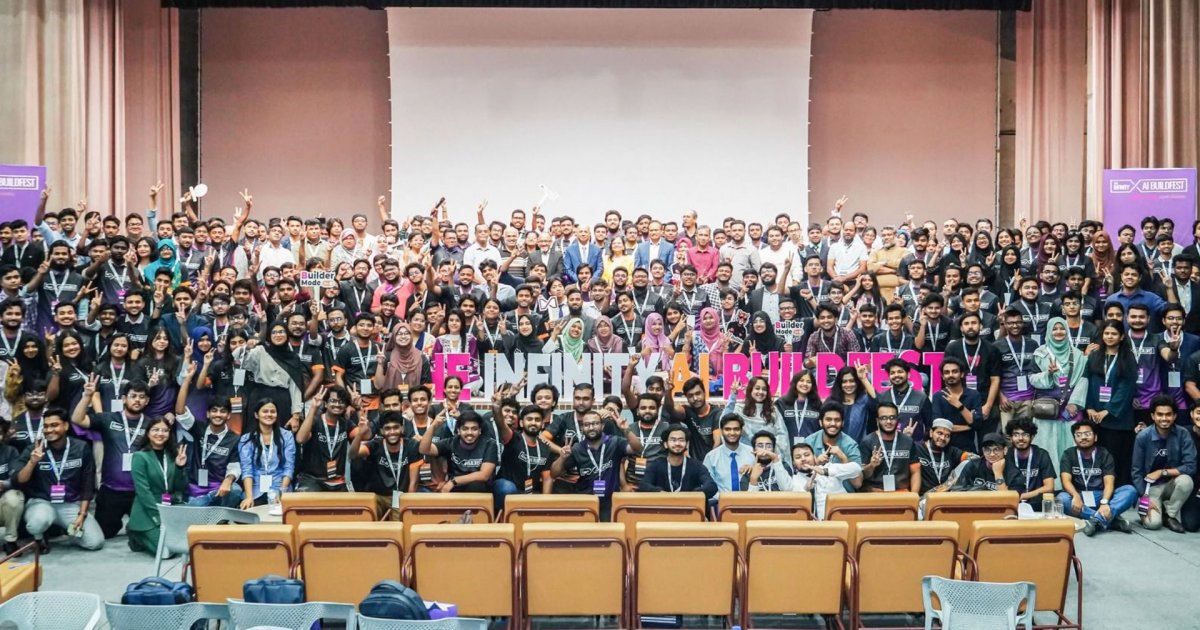
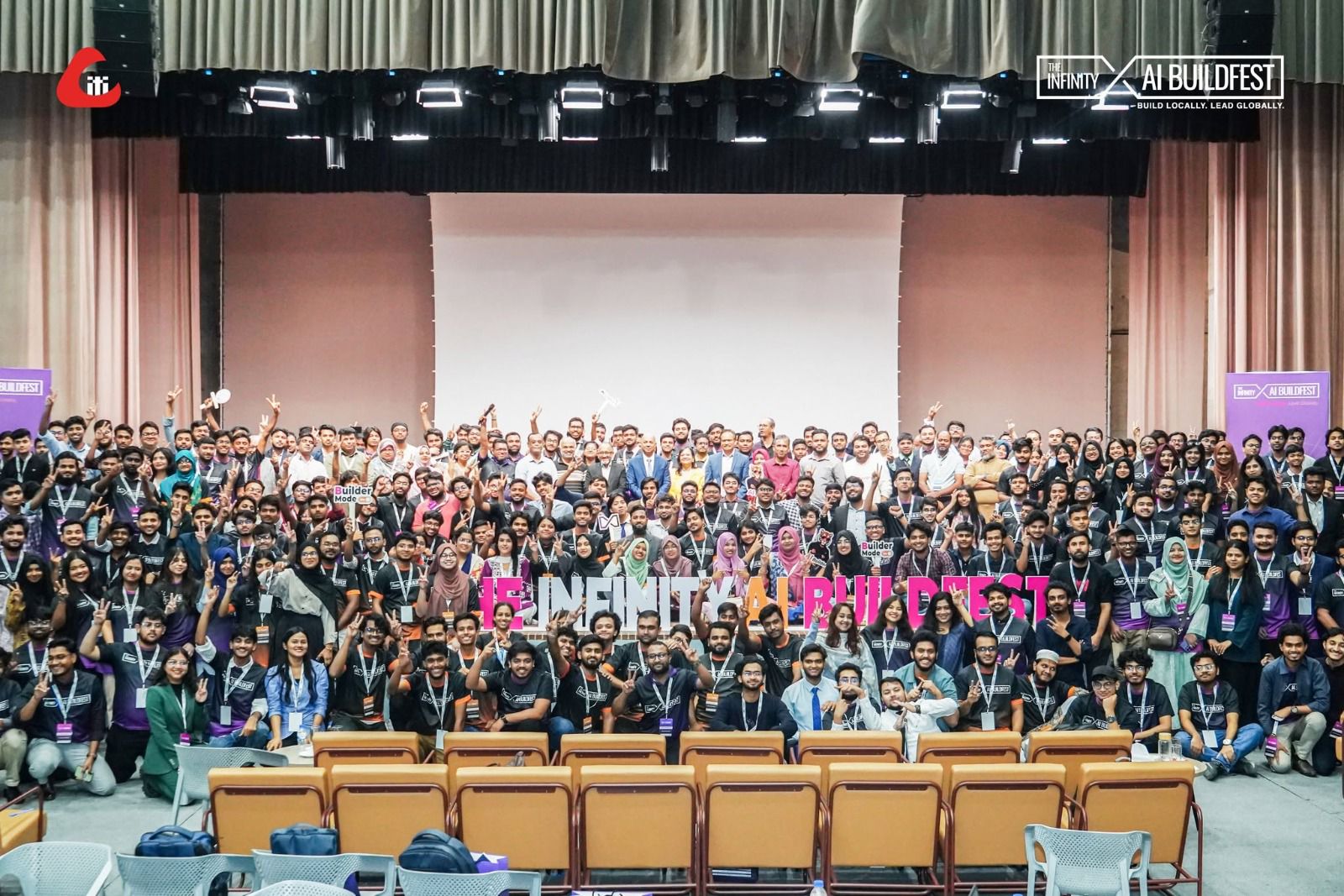
THE INFINITY AI BUILDFEST 2026 ran two competitions on the same day. The main event — 208 teams, five innovation tracks, eleven independent judging panels — tested what teams had built over weeks of preparation. The second competition was different in almost every respect.
The Vibe Coding to Production (VCP) Challenge gave participants one hour. No prior preparation. No team. A problem statement, a set of AI-native tools, and a timer. The evaluation criteria were not about how clever the idea was. They were about whether what was built at the end of that hour could actually be deployed.
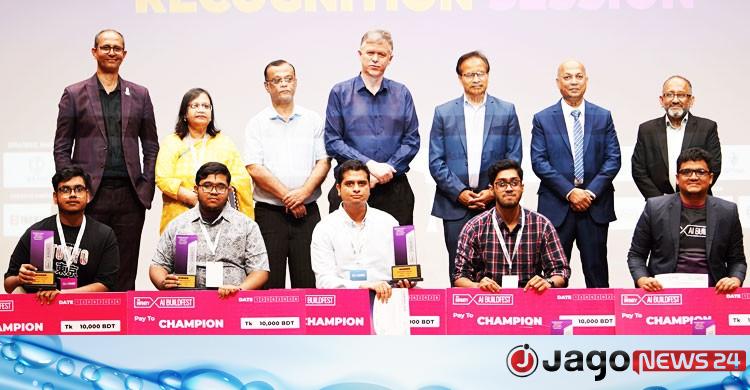
Md. Bazlur Rahman Likhon was named one of five VCP Champions — recognized alongside participants from leading universities across Bangladesh — at the Award and Recognition Session, confirmed by seven national media outlets including The Daily Star.
This article is not about the competition. It is about what winning a production-execution challenge under those conditions requires — and what the approach reveals about the gap between AI prototypes and AI systems that actually work.
The Problem with Vibe Coding
The term "vibe coding" entered the AI development lexicon as a description of LLM-assisted development — building with AI tools fluidly, intuitively, quickly. In practice, it describes how a significant percentage of AI projects begin in 2026: a developer opens a frontier model, starts prompting, and within hours has something that looks and feels like a finished product.
The problem is not the speed. The problem is what gets skipped.
Most AI prototypes are architecturally hollow. They have a working demo path — the sequence of inputs that produce the expected output — and nothing else. No error handling. No authentication. No observability. No cost controls. No graceful degradation when the model returns something unexpected. They are, in the precise technical sense, not systems. They are demonstrations of what a system might eventually do.
The distance between a convincing demo and a deployable system is where most AI projects stall. It is not a distance measured in features. It is a distance measured in engineering decisions — hundreds of small choices about failure modes, boundary conditions, data governance, and operational constraints that never appear in a prototype because no one forced them to.
The VCP Challenge was structured around exactly this gap. "Vibe Coding to Production" is not a contradiction — it is a challenge statement. Can you build with AI tools at speed and produce something that would survive contact with real users, real data, and real infrastructure constraints? The engineers who can have internalized production thinking deeply enough that it runs in parallel with the building process, not after it.
What Distinguishes Production-Ready AI Systems
Across five innovation tracks and 208 teams at the BuildFest, the same characteristics consistently separated deployable work from impressive demos. They apply equally to a one-hour VCP challenge and to a six-month enterprise AI project.
Architecture before features. A system built on a sound, scalable architecture — even with limited features — demonstrates more production potential than a feature-rich system built on scaffolding that will not survive real load. The architectural question is whether the system can absorb change — in data, in load, in requirements — without collapsing. A prototype rarely has an answer. A production system shows it in the structure itself.
Reliability by design. A production system is not one that works when conditions are ideal. It is one that fails predictably and recovers gracefully when conditions are not. Input validation, fallback logic, error states with meaningful messaging, retry mechanisms with backoff — these are not polish. They are the engineering surface that determines whether a system can be operated by someone other than its builder.
Scalability awareness. In AI systems, scalability is not just a load question — it is a cost question. Inference is expensive. A system that calls a frontier model for every trivial operation will cost ten times more to run at scale than one designed around that constraint. Systems designed with cost-per-operation in mind from the first line of code make different architectural choices than systems optimized later.
Security posture. Authentication, authorization, input sanitization, and protection against prompt injection are not security theater. They are the difference between a system an enterprise can deploy and one that cannot survive a first review. Security-aware design — even at a basic level — is an immediate signal of production intent.
Deployment readiness. The final test is whether a submission could be handed to an engineer who was not in the room and be running in a production environment within hours. That requires documentation, environment configuration, dependency management, and a system that does not silently fail on first deployment. It is a practical bar. Most prototypes do not clear it.
The Winning Approach
What six years of production AI delivery contributes to a one-hour execution challenge is not speed. It is an internalized framework for making decisions under pressure — defaults calibrated through building systems that failed, were debugged, were refactored, and eventually worked at scale for paying clients.
Several principles shaped the approach:
Start with the seam, not the feature. The first decision in any production system is where the AI component touches the rest of the architecture. That interface — how data enters the model, how outputs are validated, how errors are surfaced — is the highest-leverage point in the entire design. Getting the seam right means everything downstream is buildable. Getting it wrong means every feature becomes a renegotiation.
Prompt structure as architecture. In AI-native systems, prompts are not inputs — they are configuration. A well-structured prompt that defines output format, failure behavior, and boundary conditions is architecturally equivalent to an API contract. In a one-hour challenge, the difference between a system that works reliably and one that works occasionally often comes down entirely to whether the prompts were designed with the same care as the code around them.[1]
Intentional feature exclusion. Production engineering under time constraints is not about building more. It is about identifying what not to build so that what is built works correctly. Several features that would have been visible in a demo were excluded — not because they were technically difficult, but because their inclusion would have introduced complexity that could not be made reliable within the available time. A system that does three things well is more deployable than a system that does seven things inconsistently.
Observability from the start. Logging, error tracking, and output monitoring are not afterthoughts. They are the instrumentation that makes a system operable by someone other than its creator. Building observability in from the beginning — even minimal observability — changes every architectural decision that follows it.
Cost architecture as a constraint, not an optimization. Every AI call in a system has a cost. Model selection, caching strategy, and batching logic are design constraints that determine whether a system is economically viable at scale. Treating cost as a first-class architectural concern — not a post-launch optimization — changes which tools get used, how they are called, and how outputs are reused.
From Prototype to Production: The Engineering Surface That Gets Skipped
The VCP Challenge compressed a set of decisions that most AI developers make badly or not at all. These are the layers that separate a prototype from a production system — and the layers most consistently absent from AI projects that stall after the demo:
Authentication and authorization. Who can use the system, under what conditions, and with what access level. In AI systems specifically, access control also governs model access — which users trigger which inference calls, with what rate limits. Not optional in any system that touches real data or real users.
Observability. Structured logging, error capture, and output auditing. A system without observability cannot be debugged in production, cannot be improved based on usage patterns, and cannot be trusted to behave consistently over time. This is the layer most commonly skipped in demo-mode AI development.
Cost controls. Token budgets, model tier selection, caching of repeated queries, and circuit breakers that prevent runaway inference costs. In a commercial deployment, uncontrolled inference spend is an operational risk. Systems designed without cost architecture surface this problem at exactly the wrong moment — at scale, live.
Failure handling. Graceful degradation when a model returns unexpected output, when an external dependency is unavailable, when an input falls outside the expected distribution. A production system communicates failure clearly and recovers predictably. A prototype fails silently or catastrophically, with no path back.
Data governance. What data is retained, for how long, under what conditions, with what access controls. In AI systems that process user inputs through third-party models, data governance determines which model providers can be used, which markets the system can operate in, and which clients can adopt it. It is a design constraint, not a compliance exercise.
Lessons for AI Builders
The VCP Championship distilled a set of observations that apply beyond any single competition. These are the patterns that consistently separate engineers who ship production AI from engineers who build impressive demos:
Treat prompts as code. Prompts that are not version-controlled, not tested, and not structured as configuration are a maintenance liability. The discipline that software engineering applies to code — review, versioning, testing, documentation — applies equally to prompts in production AI systems.
Build the error path first. Before building the happy path, define what happens when the system fails. What is the fallback? What does the user see? What is logged? An error path designed first produces a more resilient happy path as a byproduct.
Scope ruthlessly. The feature that is hardest to make reliable should be the first candidate for exclusion. In time-constrained delivery — and all production delivery is time-constrained — a narrow, reliable system is more valuable than a broad, fragile one.
Make cost visible. Every AI call in a system should have a visible cost implication. Engineers who build with cost awareness from the start make different architectural decisions than those who optimize later. The difference between the two approaches is measurable in production invoices.
Design for the operator, not the demo audience. A production system will be operated by someone who was not in the room when it was built. Every design decision should pass the test: can someone who has never seen this code understand what it does, why it fails, and how to fix it?
Observability is a feature. Logging, monitoring, and alerting are not infrastructure concerns separate from the application. They are the mechanism by which a system earns the right to remain in production. Build them as deliberately as you build the core logic.
Deployment is the real test. A system that does not deploy cleanly, consistently, and predictably in a new environment has not been finished. The last ten percent of production engineering — environment configuration, dependency management, deployment documentation — is where most prototypes stop and most production systems begin.
The Recognition
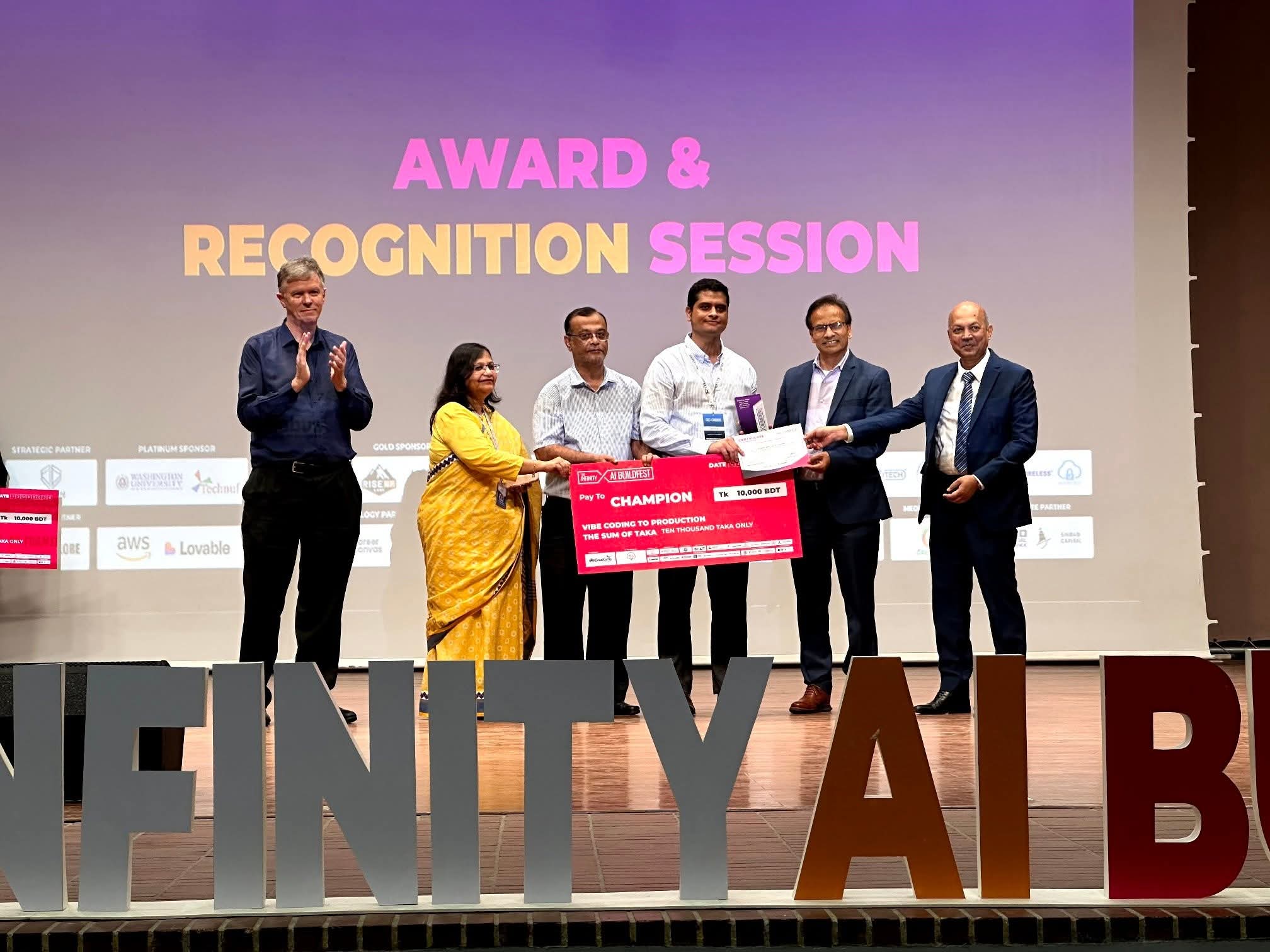
Md. Bazlur Rahman Likhon receives the VCP Championship recognition on stage at the Award and Recognition Session, THE INFINITY AI BUILDFEST 2026, BRAC University, Dhaka, 12 June 2026.
The VCP Championship was awarded to five individuals evaluated through a process independent from the main track judging panels — assessed by its own criteria, against its own jury. The result was covered across seven national outlets, with The Daily Star explicitly naming Likhon among the five VCP Champions.
About Md. Bazlur Rahman Likhon
Md. Bazlur Rahman Likhon is a Senior Cloud & AI Engineer based in Dhaka, Bangladesh. Over six years, he has delivered production AI systems for enterprise clients across Bangladesh, the United States, the United Kingdom, Japan, and China — spanning Generative AI platforms, RAG systems, voice AI automation, biometric identity pipelines, intelligent document processing, and multi-cloud infrastructure on Google Cloud, Microsoft Azure, and Oracle Cloud.
He holds professional certifications across Google Cloud, Microsoft Azure, Oracle Cloud, and Proofpoint, spanning machine learning engineering, data infrastructure, cloud security, and generative AI architecture.
Production Engineering Is the Differentiator
The AI industry in 2026 is not short of ideas. It is not short of prototypes. It is not short of engineers who can build something that looks impressive in a demo environment with favorable inputs and a patient evaluator watching.
What it is short of is engineers who can take an AI-native idea from concept to deployed system — with authentication, observability, cost controls, failure handling, and data governance — quickly enough to matter competitively.
That gap is widening. The tools for building AI prototypes are becoming more accessible every month. The tools for building production AI systems are the same ones they have always been: judgment, experience, and the hard-won understanding of what fails in the real world and why.
The VCP Championship tests exactly that gap. One hour. AI-native tools. A deployment-ready result as the bar. The engineers who perform well under those conditions are the ones who have internalized production thinking deeply enough that it does not require extra time — it runs as the default mode of building.
Media Coverage